

Garden Tips
September is Pollinator Month: Plants That Keep Bees & Butterflies Happy
Sep
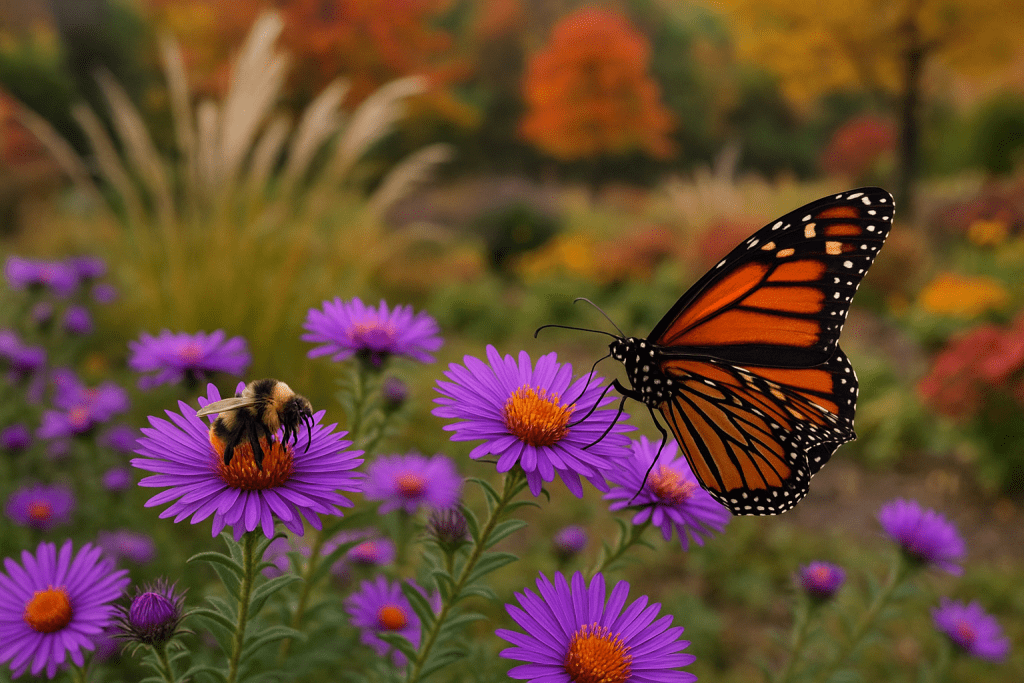
September might feel like the garden is slowing down, but for pollinators, it’s a critical time. Bees, butterflies, and other beneficial insects are busy gathering food and preparing for the colder months ahead. By planting late-blooming flowers, you can keep your garden buzzing with life while supporting the creatures that make our world bloom.
Why September Matters for Pollinators
As summer annuals fade and many perennials finish their show, pollinators rely on plants that continue flowering into fall. Offering nectar and pollen now helps bees store energy and butterflies fuel up for long migrations, like the monarch’s journey south.
Three Late-Season Favorites for Pollinators
🌼 Goldenrod (Solidago)
Often misunderstood as a source of allergies (that’s actually ragweed!), goldenrod is a powerhouse pollinator plant. Its golden plumes are magnets for native bees, wasps, and butterflies, making it an essential late-summer bloomer.
🌸 Joe Pye Weed (Eutrochium)
With tall stems topped by clusters of mauve-pink flowers, Joe Pye weed is a butterfly favorite. Plant it in a sunny, moist spot and enjoy watching swallowtails and monarchs flock to its blooms.
🌺 Zinnias (Zinnia elegans)
Few flowers are as cheerful—or as butterfly-friendly—as zinnias. Available in a rainbow of colors, these annuals are easy to grow from seed and provide steady nectar right up until frost.
Planting for a Purpose
Even just a few of these plants can make a difference for pollinators in your backyard. Pair them with other late bloomers like asters, sedum, or coneflowers, and you’ll create a garden that supports wildlife well into autumn.
✨ This September, celebrate Pollinator Month by planting with a purpose—your garden will be brighter, and the bees and butterflies will thank you.